How to get your business recommended by ChatGPT, Perplexity and Google’s AI answers
More customers now ask an AI assistant instead of scrolling through search results. Here’s how AI search actually finds and chooses businesses — and the practical steps that make yours easy to recommend.
 Nasir Mollah
6 min read
On this page8 sections
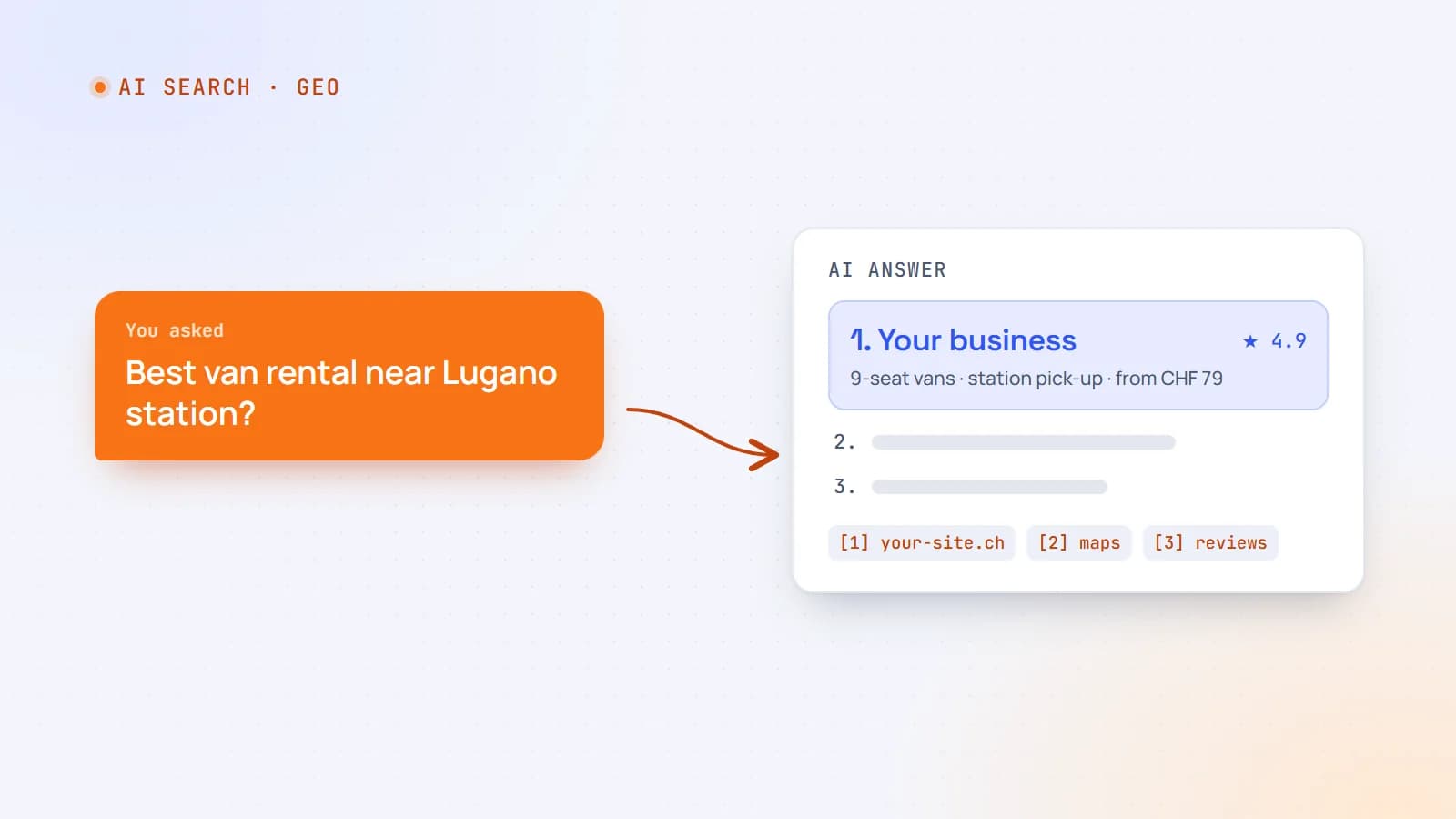
“What’s a good trauma therapist in Denver who takes my insurance?” “Which car rental at Lugano station has automatic vans?” A growing number of people now type questions like these into ChatGPT, Perplexity, Gemini or Google’s AI Overviews instead of browsing ten blue links.
The AI writes an answer, often names a few businesses, and links to its sources. If your business isn’t in that answer, the customer may never see you at all.
Optimizing for this is sometimes called generative engine optimization (GEO) or AI search optimization. The name is new; most of the work isn’t. This guide explains how AI search chooses what to recommend and what you can actually do about it.
How AI search finds businesses
Most AI assistants answer questions about current, local or specific things using retrieval: they run a web search behind the scenes, read a handful of pages, and write an answer based on them, usually with citations.
That has an important consequence: if search engines can’t find and understand your pages, AI assistants can’t either.
- ChatGPT’s search features use their own crawler alongside results from search partners.
- Google’s AI Overviews and AI Mode draw on Google’s own index.
- Perplexity runs its own crawler and search index.
The model’s “built-in” knowledge from training matters too — especially for well-known brands — but for most small businesses, being retrievable today matters far more than being memorized from years ago.
What makes an AI recommend one business over another
AI systems don’t publish their ranking rules, so be wary of anyone who promises guaranteed placement. But the pattern is clear from how these systems work: they favor sources that are findable, understandable, specific, consistent and trusted.
1. Findable: crawlable pages that load reliably
- Make sure important pages are indexable: no accidental
noindex, no blocked folders inrobots.txt, no content hidden behind logins or heavy client-side rendering. - Check that you aren’t blocking AI crawlers you actually want. Many sites block them by accident through security plugins or copied
robots.txtfiles. Common user agents includeOAI-SearchBotandChatGPT-User(ChatGPT’s search and browsing),GPTBot(OpenAI’s training crawler),PerplexityBot,ClaudeBotandGoogle-Extended(which controls use of your content for Gemini training, not Google Search). - Keep a clean XML sitemap and fast, reliable pages. Crawlers give up on slow or broken sites.
You can choose to allow search-related crawlers while blocking training crawlers — that’s a business decision. Just make it deliberately.
2. Understandable: clear facts in plain text
AI models are excellent readers — but only of what’s actually on the page. Vague marketing copy gives them nothing to work with.
Compare:
“We offer premium mobility solutions tailored to your journey.”
with:
“We rent cars and 9-seat vans in Lugano and Bellinzona. Pick-up at Lugano station or your hotel. Automatic and electric models available. From CHF 79 per day, including 200 km.”
The second version answers the exact questions people ask an assistant. Write pages that state who you are, what you offer, where, for whom, at what price and how to book — in full sentences.
3. Specific: one page per thing people ask about
Assistants answer specific questions, so they look for specific pages. A single “Services” page listing ten things is weaker than:
- one page per service or treatment;
- one page per location or area you serve;
- a clear pricing or fees page;
- an FAQ that answers real questions with real answers.
This is the same structure that works for traditional local SEO, which is exactly why the two overlap so much.
4. Consistent: the same facts everywhere
AI systems cross-check. If your website says you’re open Saturdays, your Google Business Profile says you’re not, and a directory lists an old phone number, the assistant has reason to doubt all of it.
Keep your name, address, phone, hours, services and prices consistent across:
- your website;
- your Google Business Profile and other maps listings;
- industry directories (for example therapy directories or rental marketplaces);
- social profiles.
5. Trusted: evidence from other sources
When an assistant recommends a business, it often leans on what other sites say: reviews, directories, local news, comparison articles, community discussions. You can’t control those, but you can influence them:
- Ask happy customers for reviews on the platforms people actually check.
- Get listed in the reputable directories for your industry and area.
- Earn mentions with genuinely useful content, partnerships or local involvement.
Structured data: say it in a machine-readable way
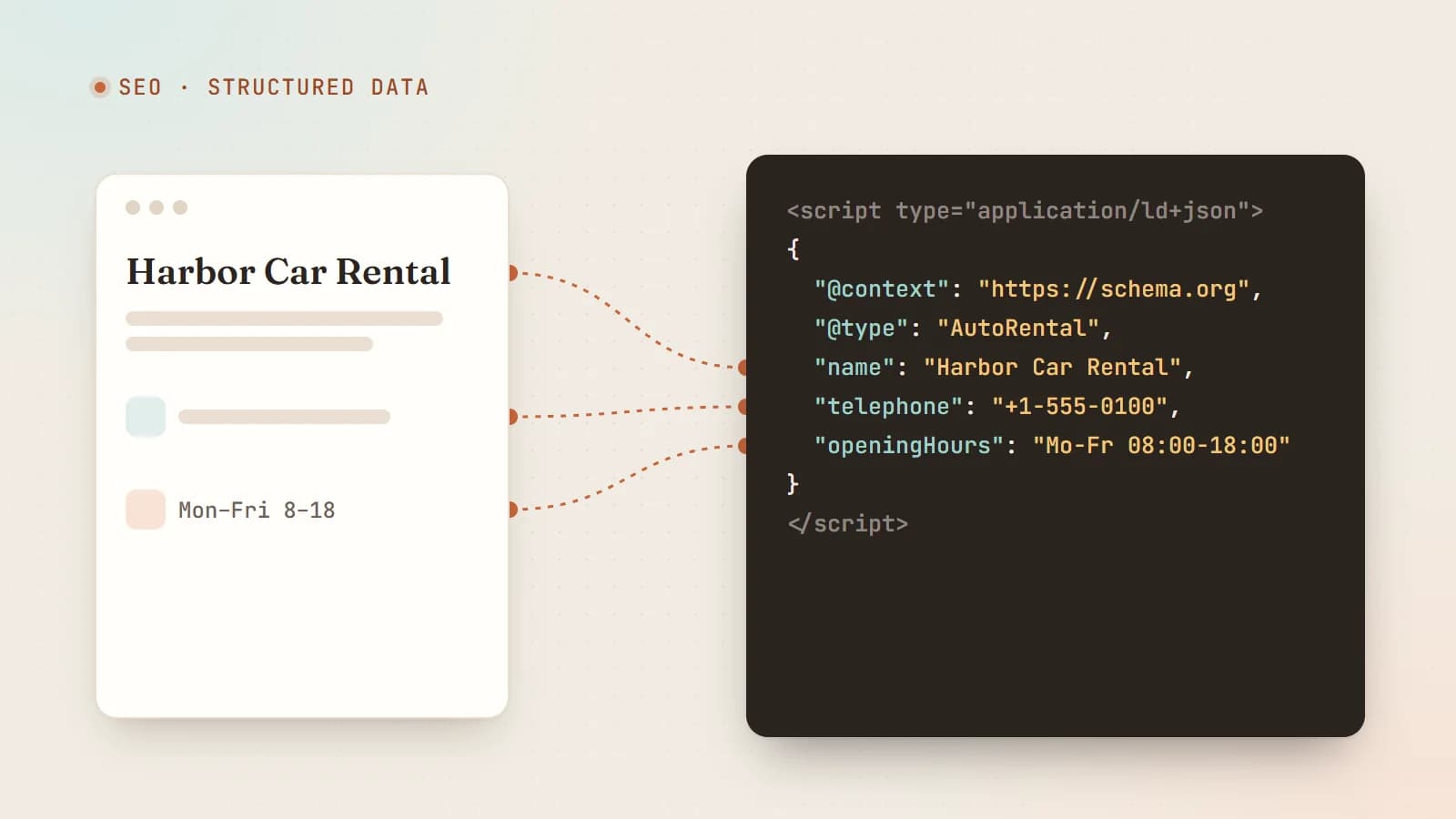
Structured data (JSON-LD using the schema.org vocabulary) lets you state key facts in a format machines can’t misread: your business type, address, opening hours, services, prices, reviews and FAQs.
{
  "@context": "https://schema.org",
  "@type": "AutoRental",
  "name": "Example Car Rental",
  "url": "https://www.example.ch",
  "telephone": "+41 91 000 00 00",
  "address": {
    "@type": "PostalAddress",
    "addressLocality": "Lugano",
    "addressCountry": "CH"
  },
  "areaServed": ["Lugano", "Bellinzona", "Locarno"]
}
Structured data isn’t a magic switch for AI visibility, but it removes ambiguity — and it powers rich results in Google at the same time. Only mark up information that’s visible on the page and keep it in sync with your content.
Content that gets cited
When AI answers cite sources, they tend to pick pages that answer the question directly and clearly. Good habits:
- Lead with the answer. Put the key fact in the first sentence of a section, then explain.
- Use descriptive headings that match how people ask (“How much does EMDR therapy cost in Denver?”).
- Include specifics: numbers, prices, timeframes, locations, names of methods and products.
- Show expertise: who wrote it, their qualifications, and when it was last updated.
- Keep it current. Outdated prices or hours are a reason not to cite you.
What about llms.txt?
You may have heard of llms.txt — a proposed plain-text file at your site root that summarizes your site for AI tools. It’s cheap to add and can help some tools, but the major AI search products don’t depend on it. Treat it as a nice extra, never as a replacement for crawlable pages with clear content.
How to measure AI visibility
You can’t see a ranking report for AI answers the way you can for Google, but you can track useful signals:
- Referral traffic in your analytics from domains such as
chatgpt.com,perplexity.ai,gemini.google.comandcopilot.microsoft.com. - Ask the assistants yourself — regularly, with the questions your customers ask — and note whether you’re mentioned and what they say. Try a few phrasings and locations.
- Search Console for impressions and clicks from Google, including AI features.
- “How did you hear about us?” on contact forms. People increasingly answer “ChatGPT”.
A practical checklist
- Confirm your important pages are indexable and that you aren’t accidentally blocking AI search crawlers.
- Rewrite key pages so they state who, what, where, for whom, price and how to book — in plain sentences.
- Create one page per main service and per location you serve.
- Add an FAQ with real questions and direct answers.
- Add accurate structured data for your business, services and FAQs.
- Make your business details consistent across your site, Google Business Profile and directories.
- Build reviews and mentions on trusted third-party sites.
- Track AI referrals and test assistant answers monthly.
The bottom line
AI search doesn’t replace SEO — it rewards the fundamentals even more. Assistants recommend businesses they can find, understand and trust. Make your facts crawlable, clear, specific and consistent, and you give every AI assistant a good reason to put your name in the answer.
- AI Search
- SEO
- GEO
- Structured Data
Keep reading
6 min read
Structured data and JSON-LD: help Google and AI understand your website
Structured data tells search engines and AI systems exactly what your page is about — your business, services, articles and reviews — in a format machines can’t misread. Here’s how JSON-LD works, which types matter, and how to add it correctly.
- SEO
- Structured Data
- JSON-LD
- AI Search
5 min read
Local SEO for small businesses: how to show up when people search nearby
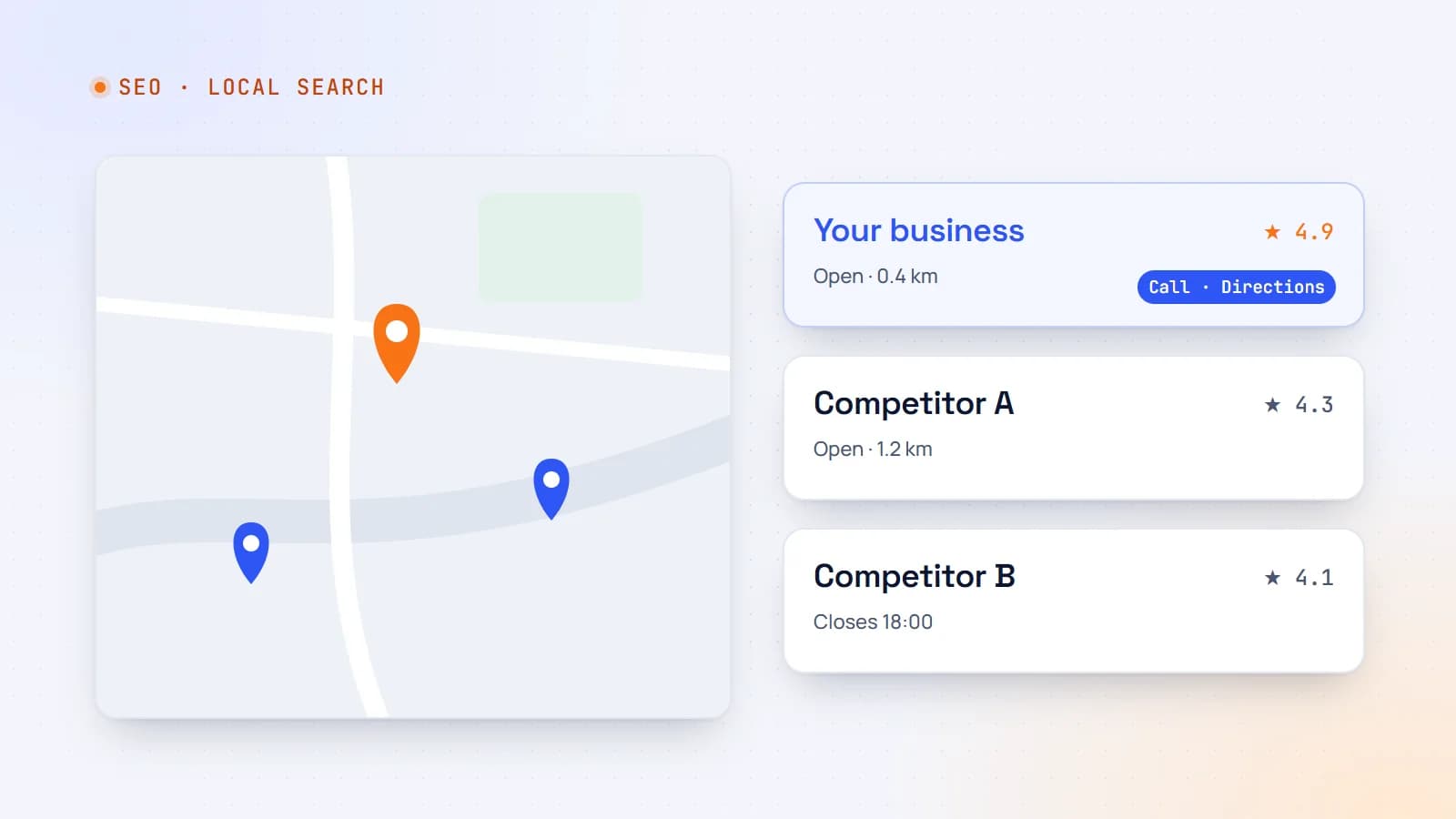
When someone searches “therapist near me” or “car rental Lugano”, Google shows a map and a handful of businesses. Here’s how local search works and a practical plan to make your business one of them.
- Local SEO
- SEO
- Small Business
- Structured Data
5 min read
Google’s September 2026 spam update is done: how to check if your site was hit
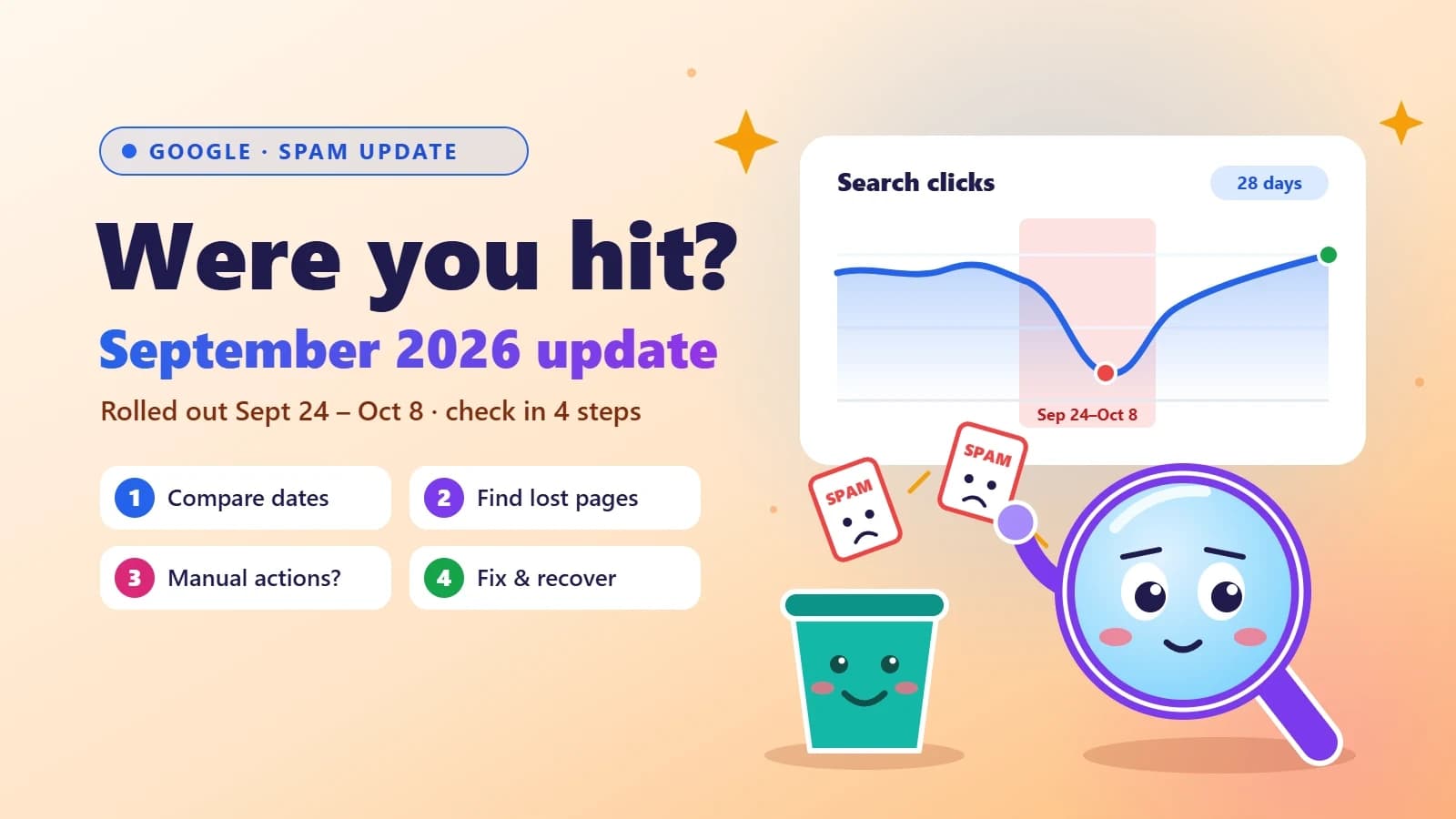
Google’s fourth spam update of 2026 took almost 14 days to roll out — far longer than the others. Here’s a simple Search Console check to see if your traffic was affected, what spam policies usually trip up small business sites, and how to recover.
- SEO
- Google Updates
- Search Console
- Small Business
Building something? Let’s talk.
If you’re planning a web app, a website or a new feature, a free call is a good place to start — you’ll get honest options, a fixed price and a timeline.